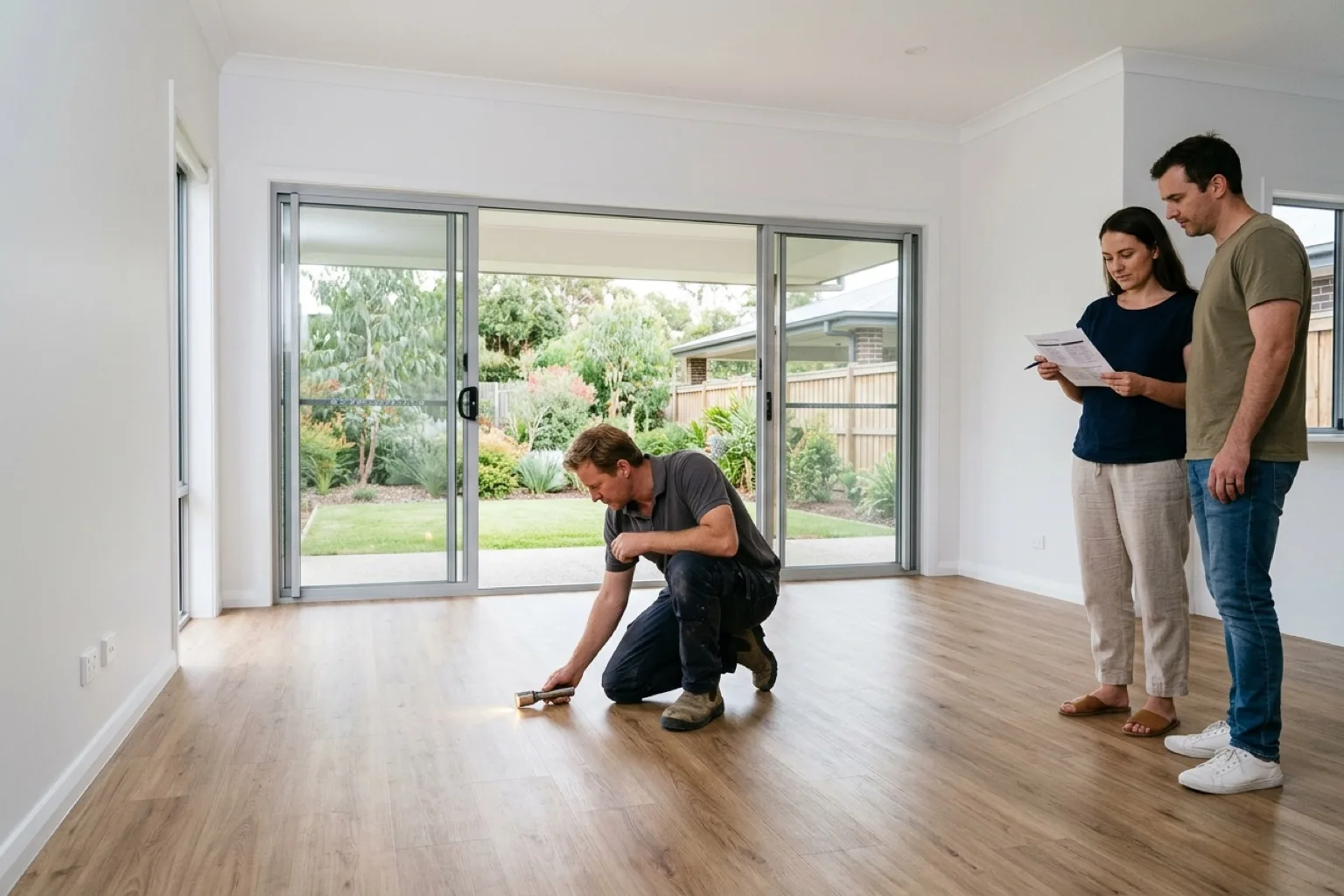
The end of a build is the part I brief clients on hardest, because it's the part they've been picturing for a year and the picture is wrong. They imagine a day. Keys, a handshake, the furniture truck. What actually happens is a stretch of two or three weeks with three separate events in it, and the order of those events, and who controls each one, is what decides whether the finish feels calm or feels like a fight.
A family at Woonona last spring had booked the removalist for the day I'd told them practical completion was likely. Reasonable, on the face of it. But practical completion isn't the day you move in. The certifier hadn't been through for the final inspection, the occupation certificate hadn't been issued, and there was a downpipe the plumber was coming back for on the Thursday. We moved the truck. It was fine. It's always fine, but only because someone explains the three dates early, so here they are.
Three dates, not one
Practical completion is a contract event. It's the point where the house is finished to the standard the contract describes, apart from minor items that don't stop it being used for its purpose. It triggers the final progress payment. The builder tells you the house has reached it, you walk through it together, and a list of anything outstanding is written down.
The occupation certificate is a legal event. It's issued by the principal certifier, not the builder, and it's what says the house can be lived in. You can't lawfully occupy a new dwelling in NSW without one. The certifier does a final inspection first, and they don't issue the certificate until the building matches the approval and their mandatory inspections through the build have all been done.
Handover is the practical event. Keys, manuals, warranties for the appliances, the certificates for the waterproofing and the termite treatment and the glazing, the final payment. On our jobs it happens after the other two, never before.
People conflate the first two constantly, and the confusion runs both ways. Some think practical completion means they can move in. Others think the occupation certificate is the builder signing off on quality. Neither is right. The certificate is about compliance with the approval. The defects walk is about the quality of the finish. Different people, different documents, different questions.
What the certifier is actually there for
The principal certifier has been on the job since before the slab. They did the critical stage inspections along the way, the ones that had to happen before the work was covered up, and the final inspection is the one they're not allowed to hand to anyone else. NSW's guidance for certifiers, in the Government's frequently asked questions for building certifiers, is blunt about it: the principal certifier can let another certifier do a stage inspection, but not the final one before the occupation certificate, and if the requirements for the certificate aren't met, they can't issue it. Their role, in the department's own words, is not to smooth the path for the applicant.
I like that sentence, because clients sometimes expect me to lean on the certifier at the end and I won't. What I do instead is make sure there's nothing for the certifier to find. That means the final inspection is booked after the trades have finished, not before, with the paperwork ready: the engineer's certificates, the waterproofing certificate, the plumbing compliance, the smoke alarm and glazing documentation, the BASIX commitments ticked off. The certifier's final inspection is usually a short visit if the file is complete. It becomes a long one, with a second visit, when it isn't, and a second visit is a week or two off your move date.
One more thing from that same guidance that's worth knowing. The occupation certificate is based on what the certifier inspected and recorded at the time. Something that turns up as a defect afterwards isn't a certifier matter. It's a contract and warranty matter, between you and the builder. Which brings me to the walk.
The defects walk, and how it should run
This is the bit you control, so do it properly. On our jobs we walk the house twice. Once before practical completion, builder and client together, room by room, with a printed floor plan and a pen. Then again at handover to close out the list.
What you're looking for is finish, not structure. The structure was inspected at the stages by the certifier and the engineer, and you're not going to find a footing problem by looking at a skirting board. You're looking at paint, at the gap between the door and the jamb, at whether every window locks and every tap runs hot and cold on the right side, at tile lippage in the shower, at the cornice joins, at whether the oven door closes square. Open every cupboard. Run every appliance. Flush every toilet and then watch the cistern. Look along the walls with the afternoon light coming across them, not straight at them, because raking light shows what direct light hides.
A few things I'd tell anyone to bring. A torch, for the back of cupboards and under the benches. A phone, to photograph each item next to a bit of context so nobody argues later about which wall. And a realistic standard. New paint in a new house will have the odd mark, and a defect is something outside the tolerance the trade is held to, not something you'd prefer were different. We tell clients what the tolerance is for the thing they're pointing at. Mostly it's a defect and we fix it. Sometimes it's within tolerance and we explain why, and if they still want it changed, that's a variation, priced and written down.
On a typical house that first walk produces somewhere between a dozen and forty items. Almost all of them are half-hour jobs. The ones that take longer are the ones that need a trade back on site, the tiler, the plumber, the electrician, and those are the ones that set the handover date. A builder who's organised books those return visits the day the list is written, not the week after.
If you want a second pair of eyes, engage an independent inspector for the pre-handover walk. Some clients do. I don't mind it, and a good one finds things I've walked past because I've been looking at the house for nine months. What I'd caution against is an inspector whose business model is a long list, because forty pages of items within tolerance doesn't get you a better house, it gets you three weeks of arguing.
The final payment
The final progress payment falls due at practical completion, and the way the contract handles the defects list around that payment is worth reading before you sign the contract, not at the end. Most standard contracts let the builder be paid at practical completion with the minor items closed out within a defined period afterwards. Some clients want to hold the whole payment until every item is done. The contract will say which, and on the day that's the document, not what either side would prefer.
What matters more than the mechanics is that the list is written, agreed and dated, so there's no dispute about what's outstanding or by when.
What's covered after you move in
Two things run after handover, and they're different.
The first is the defects liability period in the contract, typically a matter of months, in which the builder comes back to fix anything that shows up as the house settles and gets lived in. Doors that swing after the frame dries out, a crack in the cornice where the plaster has moved, a tap that drips. We come back at the end of that period and do one round of it. It's normal, it's expected, and it's built into how we price a house.
The second is the statutory warranty under the Home Building Act, which applies whether or not the contract mentions it. The NSW Government's page on contracts for residential building work sets the periods out: six years for major defects and two years for everything else, running from the date the work was completed. The same page explains why the definition of completion matters, because it's the date those clocks start from. That's another reason to have practical completion agreed and written down rather than left vague.
If something structural turns up two years in, the warranty is what you're relying on, and a builder who's still trading and still licensed is what makes it worth anything. I made that point at more length in how to choose a home builder in NSW, and it's the one that matters most at the end, long after the price has been forgotten.
What we do to make the last three weeks boring
We give clients the three dates as a sequence with rough gaps between them as soon as the fit-out starts, and we update it every week. We run the pre-completion walk before we tell anyone the house is finished. We book the certifier's final inspection only when the trades are off site and the file is complete. And we don't hand over keys until the occupation certificate is in hand, which some clients find frustrating on the day and appreciate later.
If you're on a knockdown rebuild the end of the build lines up with a lease ending, and the gap between practical completion and the certificate is exactly the gap that catches people. I've covered that side in where to live during a knockdown rebuild, and the whole timeline in how long it takes to build a house.
If you're planning a new build or a knockdown rebuild in the Illawarra and want the end of it to run like that, call 0434 037 851 or send the details through the contact page.
Want a hand with this at your place? Get a free quote or call 0434 037 851.