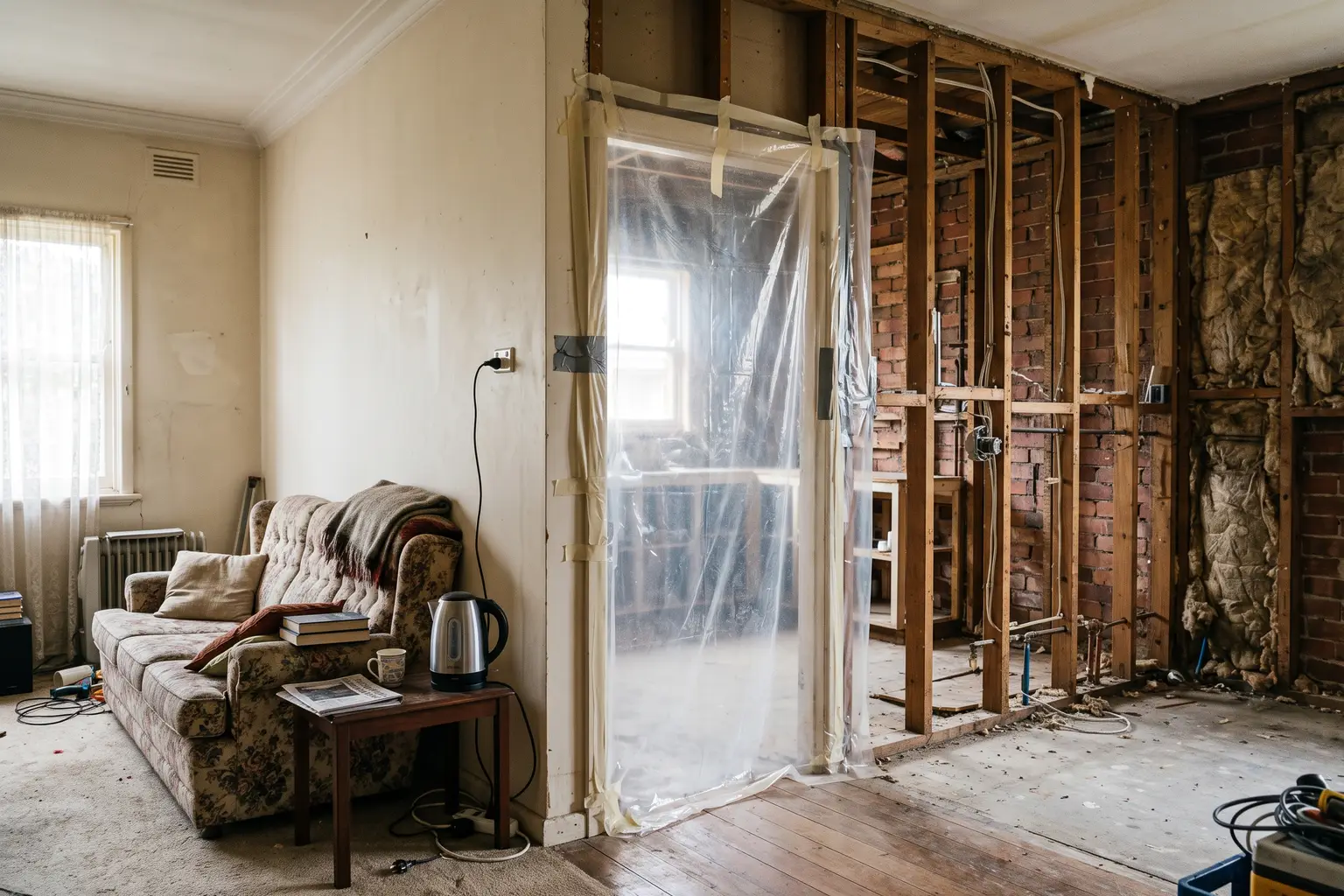
A couple at Corrimal asked us the question the way everyone does. Kitchen, main bathroom and the wall between the kitchen and the lounge coming out. How long? They were expecting one number, and the number they had in their heads was the one from the renovation shows, which is weeks.
The answer is two numbers, and the first one is the one nobody warns you about. There's the time on site, when the house is a work zone. Then there's the lead time before that, when the design is settled, the approval is sorted if the job needs one, the engineer has signed off the beam, and the cabinetry has been measured and is being made. On that Corrimal job the lead time was longer than the build, which is normal, and it's the half of the timeline you can actually shorten by making decisions early.
How long does a home renovation take?
For a single room, most renovations run a couple of weeks on site once everything is ordered and made. A kitchen is a couple of weeks after the cabinetry arrives, a bathroom is a couple of weeks and a bit more for a full strip-out, and a laundry runs around one to three weeks depending on whether the plumbing moves. A whole-home renovation that opens up the floor plan and does two or three wet areas is a months-long job, and the exact length depends on how much of the house is being touched at once.
Add the lead time to all of those. Custom cabinetry is typically weeks from measure to delivery. A structural change needs an engineer's design and, if it's not exempt work, an approval before the wall comes out. We give a program with the fixed-price proposal so both halves are written down, and the on-site half doesn't start until the things that would stall it have arrived.
What stretches a renovation
Three things, in the order we see them.
Decisions made late. Tiles, tapware, benchtop, the exact door style. Each one has a lead time, and a benchtop chosen the week the cabinets go in means a fortnight with a kitchen and no bench. The single biggest thing an owner can do for the timeline is to make every selection before the job starts, not during it.
What's behind the walls. Older Illawarra houses hide things. A bathroom that was never waterproofed, wiring that has to be brought up to standard before the electrician will connect anything to it, a stump that's gone soft under the exact spot the new wall lands. We allow for the usual suspects, but a genuine surprise adds days, and we'd rather tell you that on the day than absorb it into a rushed finish.
Sequencing. Trades have to go in order. Waterproofing has to cure before tiling. Tiling has to be done before the plumber fits off. A renovation with two wet areas can run them staggered so one trade is never waiting on another, which is why doing a kitchen and bathroom together often takes less total time than doing them a year apart.
What the contract has to say about time
In NSW, any residential building work over $5,000 needs a written contract, and over $20,000 it needs the full home building contract, with a cooling-off period of five clear business days after you're given a copy. That contract is where the timeline lives, and the NSW Government's guide to residential building contracts is worth reading before you sign anything.
Two clauses matter for how long the job takes. The first is the variation clause. Any change to the agreed work has to be in writing, signed by both sides, and the written variation has to state the extra time as well as the extra cost. That's your protection against a timeline that quietly slides, because every addition comes with its own days attached and you see them before you agree. The second is the progress payment schedule, which on a large job has to tie payments to stages of work actually done. If the stages are described clearly, the schedule doubles as the program: you can see where the job is meant to be by the time each payment falls due.
Can you live in the house while it's renovated?
Usually, yes, for a single room or two. The work zone is sealed off with plastic sheeting and a zipped door, the dust is kept to that side of it, and the rest of the house carries on. What you need is a plan for whatever the room being renovated normally does.
- Kitchen. Set up a temporary one somewhere with a power point and a tap: a bench, a microwave, a kettle, the toaster and a camping stove or an induction plate. Expect to eat differently for a fortnight. If the laundry sink survives the job, it becomes the washing-up sink.
- Bathroom. If it's the only one in the house, this is the hard part. We stage the work so the toilet is out of action for the shortest possible stretch and tell you exactly which days those are, but a full strip-out of a sole bathroom means a few days without a shower at home. A gym membership, a relative nearby or a portable shower unit all get used.
- Laundry. The easiest to live without. A laundromat for two weeks, or a temporary hose to the machine in the garage.
- Power and water. The electrician and plumber both need the house off at points. We tell you the day before, and it's usually hours, not days.
The things people underestimate aren't the big ones. It's the noise starting at seven in the morning, the trades in and out of the front door, and the dust that gets past the sheeting no matter what anyone does. Pets and toddlers find the one gap in the barrier. Working from home in the next room to a demolition is worse than it sounds.
When it's easier to move out
A whole-home renovation that opens up the floor plan, redoes every wet area and takes the ceiling down for new wiring is a different proposition. There's no clean side of the house to live in, and the job goes faster when the trades aren't working around a family. For those jobs we'll be straight with you: it's usually easier to be out for the messy middle stretch, even if you can be in for the start and the finish.
That's a cost, and it belongs in the decision early rather than as a surprise in week three. A few months of rent or a stay with family changes the maths on a big renovation, and it's one of the reasons people weighing a major renovation against a rebuild should read our piece on renovating versus knocking down and rebuilding. If you do end up out of the house, the practical side is much the same as where to live during a knockdown rebuild, except the stretch is shorter and you can usually see the end from the start.
What we do to keep the disruption short
A renovation that's over quickly was organised before it started. We lock the selections and order the long-lead items before the first day on site, we run one crew through the job so nobody's waiting on a trade who's on another site, and we seal and protect the parts of the house you're still living in. Where two rooms are being done, we stagger them so the house never loses both at once. You get the program up front with the fixed price, and if a genuine surprise comes up we tell you the time it adds the day we find it.
If you're planning a renovation and want a realistic timeline for your house rather than a television one, have a look at how we run home renovations, then call 0434 037 851 or send the details through the contact page.
Want a hand with this at your place? Get a free quote or call 0434 037 851.