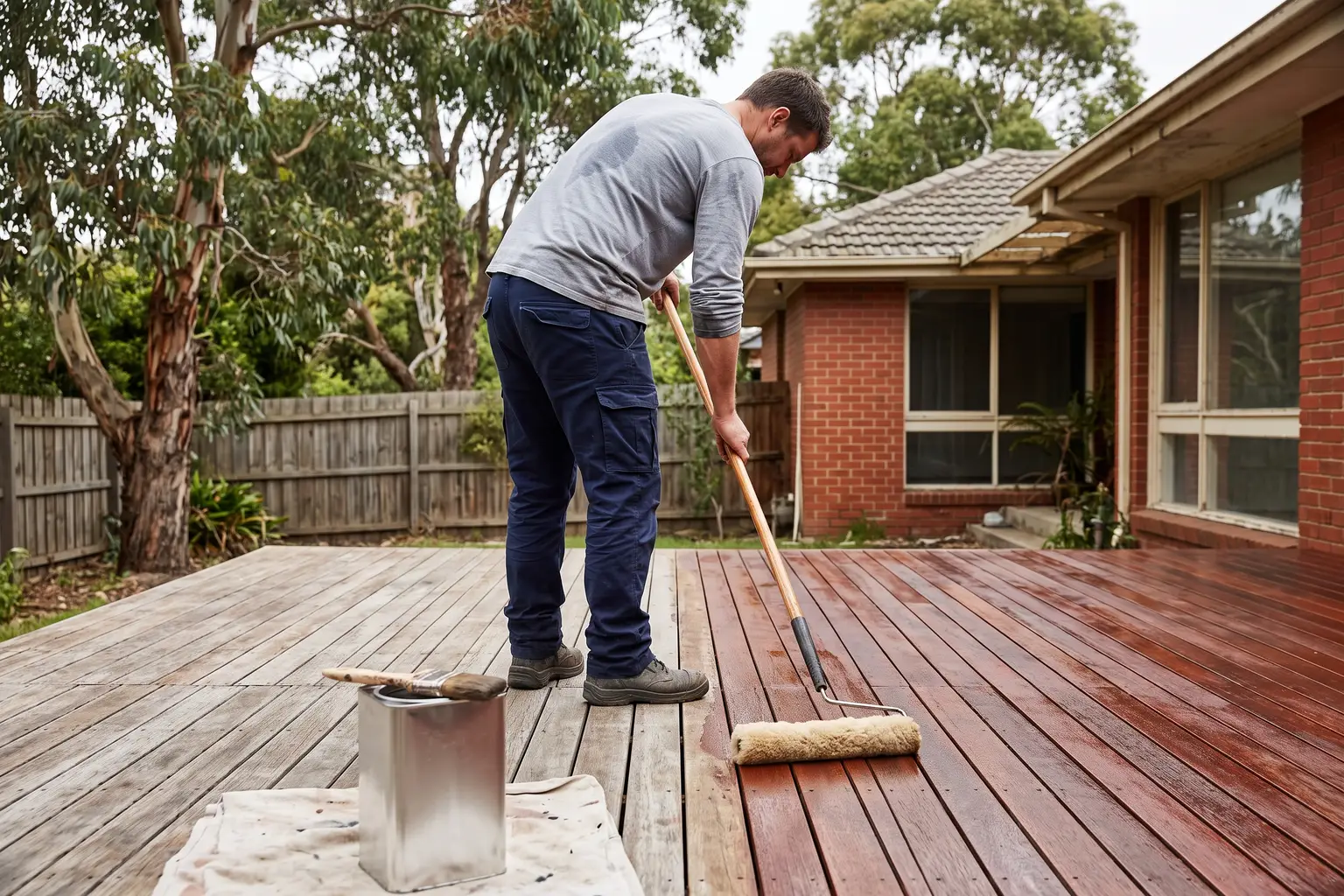
We built two merbau decks in the same month a few years back. One at Austinmer, up on posts, facing the water with nothing between it and the north-easterly. One at Figtree, tucked under a patio roof on the shaded side of the house. Both got the same boards, the same stainless screws and the same first coat of oil the day we handed over. The Austinmer owner rang inside a year asking whether the deck was meant to have gone that pale. The Figtree deck was still holding colour two winters later.
That's the honest answer to how often a deck needs oiling. It's not a number on a calendar. It's how much sun, salt and water the boards cop, and around the Illawarra that changes over a couple of streets.
How often should you oil a merbau deck?
On an exposed coastal deck, plan on a clean and a re-oil about once a year. Under a roof or on the sheltered side of the house, every second year is usually enough, and some go longer. The timber tells you when: drop a bit of water on a board, and if it beads up the finish is still working, if it darkens and soaks straight in the deck is due.
The first year is the exception. New merbau is thirsty and it's still purging tannin, so we put the first coat on at handover and most owners find it wants a second coat within six to twelve months before it settles into the longer rhythm. Spotted gum behaves much the same, with less of the red runoff. After that first cycle the schedule is set by aspect. Timber industry guidance from WoodSolutions puts reapplication of decking stains at every two to five years, and on a sheltered deck that's about right. On a west-facing deck at Warilla with no roof over it, you won't get anywhere near five.
Which class of finish, not which brand
People get stuck on brands. The choice that actually matters is the class of finish.
- Penetrating decking oils soak into the surface and don't build a film. They're the right finish for boards that get walked on, because there's no skin to scratch, peel or wear through in the traffic path. When they fade they fade evenly, and a re-coat goes straight over a clean board.
- Film-forming finishes, the varnish and deck-paint end of the market, sit on top of the timber. They look glossy on day one and then they wear where feet go, and once a film starts lifting the only fix is to strip it all back. We don't use them on decking boards.
Within the penetrating oils you've got solvent-based and water-based. Solvent-based oils go deeper and give a richer colour, and they take longer to dry between coats. Water-based ones are quicker, lower in fumes and easier to re-coat. Either is fine. What isn't fine is switching between them without a proper clean, because the new coat won't take evenly over the old one. Whatever went on at handover, stay in that family or strip back before you change.
One more thing on merbau specifically: pick an oil with a bit of colour in it rather than a clear one. Clear oils protect the timber but do nothing to slow the sun bleaching the surface, so the deck greys faster between coats.
Re-oil or sand back? How to tell
A deck that's faded evenly and still feels smooth underfoot wants a coat, not a sander. Clean it, let it dry properly and oil it. That's a morning's work on a normal deck.
A deck needs sanding back first when the surface itself has gone, not just the colour. The signs are:
- Boards that have gone grey and rough, with the grain standing up like fibre when you run a hand across them.
- Splinters lifting at board ends and around the nosing of steps.
- Black spotting that doesn't come off with a deck cleaner, which is mould that's got into the surface rather than sat on it.
- Old finish that's flaking or sitting in shiny patches in the sheltered spots, usually because too many coats went on without the timber ever drying out between them.
In those cases oil goes on over a damaged surface and you get a deck that looks patchy and wears unevenly. A light sand with a floor sander or a random orbital brings it back to clean timber, then it's cleaned, dried and oiled as if it were new. The next re-coat after that is a normal one.
What sanding won't fix is a soft board, a springy frame or a balustrade that moves. Those are structural. Oil and sandpaper make a sound deck look good; they don't make an unsound deck safe. If you push a screwdriver into a board or a joist end and it goes in, stop and get it looked at.
What we do at build time to make this easier
A deck that's easy to maintain was built that way. There are four things we do on every timber deck that decide how it ages:
- The first coat goes on before you get the keys. Bare merbau left uncoated for a season is the deck that greys before anyone's had a chance to oil it.
- Air moves underneath. A low deck with no ventilation stays wet from below and rots from the underside no matter how often the top is oiled. We set the frame height and the board gaps for airflow, which is why we're cautious about decking straight over a slab without checking drainage.
- Coastal fixings. Stainless screws or hidden clips rated for salt air. A cheap galvanised screw near the beach leaves a black weep down every board within a couple of years, and no amount of oil hides it.
- Nothing sitting on the boards. Planter pots straight on a deck leave a permanent wet ring. Trays under them, and keep creepers off the rails.
The other habit worth building is sweeping rather than hosing. Regular hosing keeps timber wet longer than rain does and shortens the time between coats. A broom or a blower most weeks, and a proper wash only when it's due for a coat.
Composite decks: don't oil them
If your deck is composite, none of this applies to the boards. They won't absorb oil, so it sits on top and goes tacky. A wash with soapy water and a stiff broom is the whole maintenance program, and the subframe under a composite deck still needs the same airflow and fixings as a timber one. If you're still choosing, our piece on merbau or composite when the deck is part of a renovation goes through where each one earns its place.
If your deck is past a re-oil and you're not sure whether it's a sand-back or a rebuild, we're happy to have a look. See what our decking work covers, then call 0434 037 851 or send the details through the contact page.
Want a hand with this at your place? Get a free quote or call 0434 037 851.